
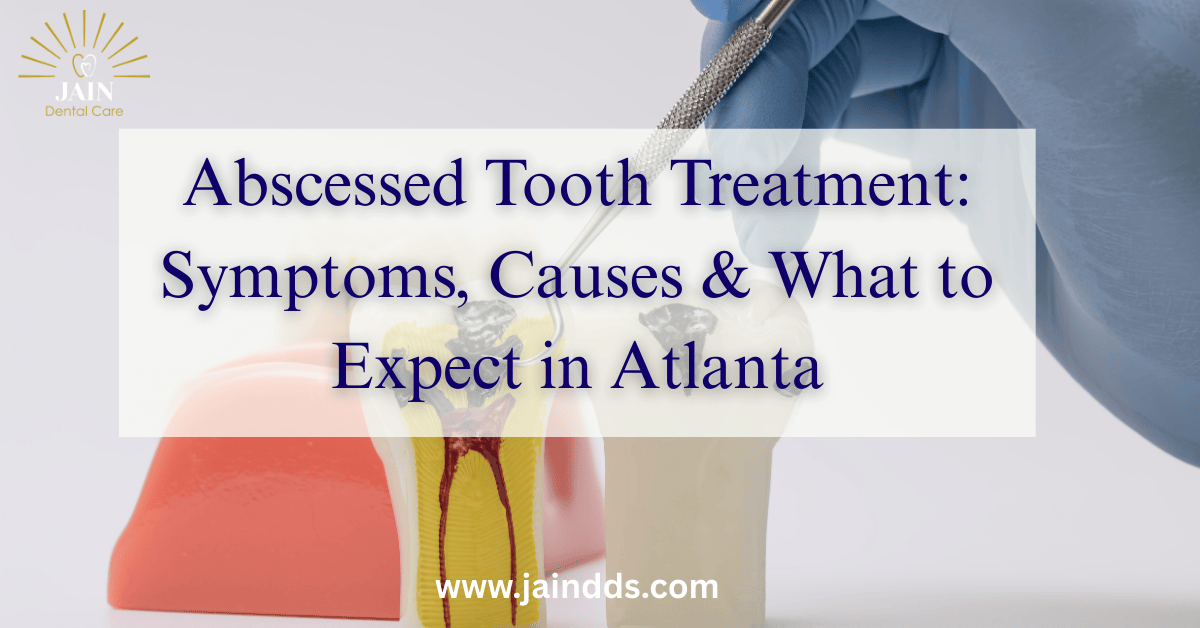
An abscessed tooth treatment plan begins with recognizing the problem early. If you’re experiencing intense discomfort, swelling, or severe tooth pain causes you concern in Atlanta, understanding this condition is vital. A tooth abscess can lead to serious complications if not addressed promptly and properly. This guide explains the abscessed tooth symptoms, underlying causes, and what to expect from treatment.
At Jain Dental Care in Atlanta, we provide comprehensive, patient-focused abscessed tooth treatment and emergency dental care. If you suspect you have an abscessed tooth, our team is ready to help you restore oral health and relieve pain quickly. Learn more about our services here: Abscessed tooth treatment.
What Is a Tooth Abscess?
A dental abscess is a pocket of pus caused by a bacterial infection near a tooth. It can develop in the following areas:
- At the tip of the root (periapical abscess)
- In the gums beside the tooth (periodontal abscess)
This buildup of pus results from untreated cavities, trauma that cracks the tooth, or gum disease. Any infection trapped inside the tooth can progress into a severe dental problem.
The presence of an abscess is painful and may cause:
- Throbbing tooth pain
- Swollen gum near tooth
- Tenderness and sensitivity to temperature
- Fever or foul taste in the mouth
Recognizing abscessed tooth symptoms and getting timely care through abscessed tooth treatment in Atlanta is crucial to prevent deep infection or tooth loss.
Common Signs of Tooth Infection
Awareness of early warning signs helps you seek care before the problem worsens. Typical signs of tooth infection include:
- Persistent, intense pain that may spread to the ear or jaw
- Throbbing tooth pain that won’t improve
- Sensitivity to hot or cold foods
- Visible swelling of gums or face
- Swollen gum near tooth
- Bad breath or bad taste in mouth
If you notice any of these symptoms or a sudden increase in discomfort, contact a dental professional immediately.

Causes of a Tooth Abscess
Understanding what triggers a dental abscess helps you take preventive actions. Below are the most common severe tooth pain causes linked to abscess formation:
1. Untreated Tooth Decay
When decay penetrates enamel and dentin, bacteria invade the inner pulp tissue, leading to infection.
2. Broken or Cracked Teeth
Grinding, injury, or biting hard foods can create fissures, allowing bacteria inside.
3. Poor Oral Hygiene
Inadequate brushing and flossing can lead to gum disease and bacterial buildup, increasing the risk of abscess.
4. Previous Dental Work
Sometimes, dental procedures may unintentionally expose nerve tissue and allow bacterial entry.
Identifying these causes helps you and your dentist plan effective abscessed tooth treatment and prevent reoccurrence.
Initial Steps for Abscessed Tooth Treatment
Before visiting the dentist, you can manage discomfort temporarily, but this does NOT replace professional care.
Immediate Actions You Can Take at Home:
- Rinse with warm salt water
- Take over-the-counter pain relievers
- Avoid chewing on the affected side
- Use cold compresses to reduce swelling
However, these measures are only temporary. Getting proper dental treatment is essential to stop infection and avoid systemic complications.
For urgent dental issues like an abscessed tooth, visit our emergency care page to learn how we quickly diagnose and treat infections to relieve pain and protect your oral health.
Dental Procedures for Treating an Abscessed Tooth:
Here’s what you can expect when you visit a dentist for abscessed tooth treatment:
1. Clinical Evaluation
Your dentist will take your medical history, discuss symptoms, and perform an oral exam.
2. X-rays and Imaging
Dental x-rays help locate the infection and determine if adjacent teeth or bone are involved.
3. Root Canal Therapy
This is the most common treatment to save the tooth. The infected pulp is removed, canals are cleaned, and the tooth is sealed.
4. Tooth Extraction
If the tooth cannot be saved due to extensive damage, extraction may be necessary followed by options like implants or bridges.
5. Incision and Drainage
In cases with significant swelling, your dentist may make a small incision to drain the abscess.
6. Prescription Antibiotics
Antibiotics may be prescribed to control infection, especially if it has spread or for patients with weakened immune systems.
Each treatment is tailored to your condition, general health, and severity of infection.
Why Timely Care Matters
Delaying or skipping abscessed tooth treatment increases the risk of serious complications, including:
- Spread of infection to jawbone or sinuses
- Systemic infection (sepsis)
- Tooth loss
- Pain that disrupts eating and sleep
Because dental infections can spread rapidly, early treatment at a trusted Atlanta dentist makes all the difference.
For quality dental care and emergency support, visit Jain Dental Care.
Preventing Tooth Abscesses
Good oral hygiene practices reduce the risk of a dental abscess. Try these habits:
- Brush teeth twice daily
- Floss daily
- Use mouthwash
- Visit your dentist for regular check-ups
- Maintain a balanced diet
Consistent care reduces the likelihood of decay and gum disease that lead to infections. For a comprehensive overview of what causes dental abscesses and how to prevent them, see this in‑depth guide from News‑Medical.net on Dental Abscess Causes and Prevention.
FAQs About Abscessed Tooth Treatment
1. What causes a tooth abscess to form?
A tooth abscess forms when bacteria enter the tooth through decay, cracks, or gum disease, leading to a localized infection.
2. What are the early signs of an abscessed tooth?
Early signs include persistent pain, swelling, throbbing tooth pain, sensitivity to temperature, and abscessed tooth symptoms like pus discharge.
3. How do I know if my tooth infection is serious?
If facial swelling, fever, severe pain, or trouble swallowing occurs, the infection may be serious and needs prompt dental attention.
4. Can an abscessed tooth heal on its own?
No. While symptoms may temporarily ease, the infection won’t resolve without professional abscessed tooth treatment and can worsen.
5. Is an abscessed tooth considered a dental emergency?
Yes. An abscess is a dental emergency because the infection can spread beyond the tooth and affect overall health.
When Should You Seek Dental Care?
If you’re in Atlanta and experience severe dental discomfort or signs of infection, it’s important to get treatment without delay. Early intervention leads to better outcomes and less invasive abscessed tooth treatment.
Schedule your evaluation today at Jain Dental Care, and restore your oral health quickly and effectively.