
Have you had a dental crown for several years and started wondering whether it is still in good condition? Perhaps it feels a little loose, looks different from before, or causes discomfort when you chew. These changes can make you wonder whether it is time for a replacement.
A dental crown is designed to protect a damaged tooth and help you eat, speak, and smile comfortably. However, like any dental restoration, it will not last forever. With proper care and regular dental visits, you may be able to use the same crown for many years.
If you are wondering how long Dental Crowns last, the answer depends on the material, your daily habits, and the condition of the natural tooth underneath. Knowing the warning signs can help you take action before a small problem becomes more serious.
How Long Do Dental Crowns Typically Last?
Most dental crowns last around 5 to 15 years, although some can last 20 years or longer. There is no exact expiry date because every person’s teeth, habits, and dental needs are different.
Several factors can affect the dental crown lifespan:
- Crown material: Porcelain, zirconia, ceramic, and metal-based crowns have different strengths and uses.
- Biting pressure: Grinding or clenching your teeth can put extra pressure on a crown.
- Daily oral care: Poor brushing and flossing can allow decay to develop around the crown’s edges.
- Condition of the tooth: The natural tooth underneath must remain healthy to support the crown.
- Regular dental checkups: Your dentist can spot early signs of damage or poor fit.
A 2026 systematic review published in the International Journal of Prosthodontics examined 64 studies covering 11,560 tooth-supported crowns. It reported five-year survival rates ranging from 90.4% to 98.5%, depending on the crown material and design. These results show that many crowns remain in place and function well after five years, but they do not guarantee how long an individual crown will last. View the published research.
7 Signs Your Dental Crown May Need Replacement
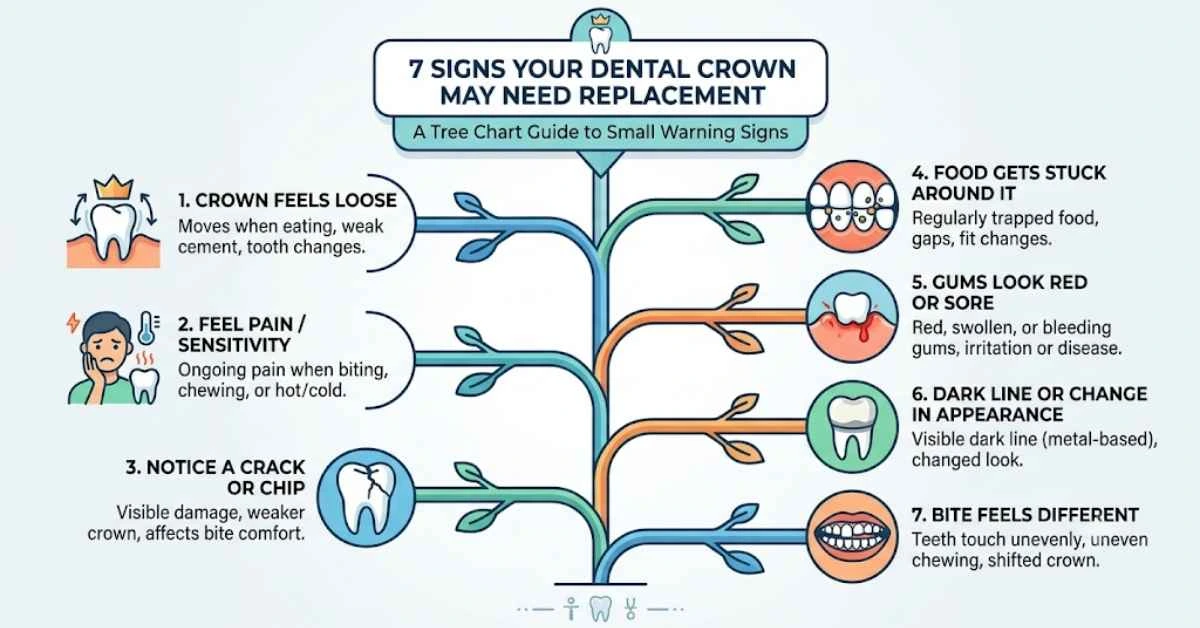
A crown does not always fail suddenly. Sometimes, it gives you small warning signs that are easy to overlook. If you notice any of the following changes, it is worth having the area checked.
1. Your Crown Feels Loose
Does your crown feel like it moves when you eat or touch it with your tongue? This may happen when the cement holding it in place becomes weak or the tooth underneath changes.
A loose crown should not be ignored. Avoid chewing on that side and contact your dentist. Do not try to fix it with household glue.
2. You Feel Pain or Sensitivity
A little sensitivity does not always mean your crown needs replacing. However, ongoing pain when biting, chewing, or drinking something hot or cold should be checked.
The cause could be decay, a crack, gum problems, or an issue with the tooth underneath. Your dentist can examine the area and recommend the right treatment.
3. You Notice a Crack or Chip
A visible crack or chipped area can make a crown weaker. Even a small chip may affect how comfortably you bite or chew.
Avoid hard foods on that side until your dentist checks it. Depending on the damage, the crown may need repair or replacement.
4. Food Keeps Getting Stuck Around It
If food regularly gets trapped near your crown, there may be a gap, a change in its fit, or a problem with a nearby tooth. This can also make cleaning difficult.
Your dentist can check how the crown sits against the surrounding teeth and find out what is causing the problem.
5. Your Gums Look Red or Feel Sore
Red, swollen, or bleeding gums around a crown may be a sign of irritation or gum disease. An edge that does not fit properly can also make the area harder to clean.
If the soreness continues, arrange a dental checkup instead of assuming it will settle on its own.
6. You Notice a Dark Line or Change in Appearance
Some older metal-based crowns with a porcelain covering may show a dark line near the gumline. This does not always mean the crown has failed.
However, if its appearance has changed or it no longer feels comfortable, your dentist can assess whether it needs attention.
7. Your Bite Feels Different
Does one tooth touch before the others when you close your mouth? Does chewing suddenly feel uneven? A change in your bite may mean the crown has shifted, worn down, or become damaged.
A dentist can check your bite and decide whether a small adjustment or a new crown is needed.
How to Make Dental Crowns Last Longer in Atlanta, Georgia
If you have received a crown in Atlanta, Georgia, taking care of it at home is an important part of protecting your dental work. A few simple habits can help keep both the crown and the natural tooth underneath in good condition.
- Brush twice a day: Use a soft-bristled toothbrush and fluoride toothpaste. Pay attention to the area where the crown meets your gum.
- Floss every day: Clean between your teeth to remove food and plaque that your toothbrush may miss.
- Avoid biting hard objects: Do not use your teeth to open packages, bite ice, or chew very hard objects.
- Manage teeth grinding: If you clench or grind your teeth during sleep, ask your dentist whether a night guard may help.
- Keep up with dental visits: Regular checkups allow your dentist to examine the crown, surrounding gums, and natural tooth.
Good dental crown care is not just about protecting the crown itself. It also helps reduce the risk of problems around the tooth. If you have other dental work, keep an eye on that too. For example, if a filling becomes loose, knowing what to do when a dental filling falls out can help you protect the affected tooth.
Does Every Damaged Crown Need to Be Replaced?
Not necessarily. The right treatment depends on what is wrong with the crown and the condition of the tooth underneath.
If the crown is slightly loose but still in good condition, your dentist may be able to clean and re-cement it. A small issue with your bite may only need an adjustment. However, a badly cracked crown, a poor fit, or decay underneath may mean that replacement is the better option.
Your dentist will examine the crown and may recommend an X-ray if needed. This helps check areas that cannot be seen during a regular visual examination.
If you are considering treatment, you can explore dental fillings and crowns at Jain Dental Care to understand the available options.
When Should You Visit a Dentist in Atlanta, Georgia?
Do not wait until your crown falls out or causes severe pain before arranging an appointment. A loose crown, repeated sensitivity, pain while chewing, or swelling around the tooth should be checked.
If your crown comes off, keep it safe and contact your dentist promptly. Avoid chewing on the exposed tooth, and do not use ordinary glue to attach the crown yourself.
It is also worth remembering that a crown protects a tooth, but it does not replace a missing tooth. If you have lost a natural tooth, the surrounding teeth and jawbone may also be affected over time. Understanding the effects of leaving a missing tooth untreated can help you make informed decisions about your oral health.
If you live in Atlanta, Georgia, and are concerned about an older crown, a dental examination can help you understand whether it is still working properly or needs attention. You can also find Jain Dental Care’s office and plan a visit.
Frequently Asked Questions
1. How often should dental crowns be replaced?
There is no fixed replacement schedule. A crown should be replaced when it becomes damaged, no longer fits properly, or has a problem that cannot be corrected with a simple repair. Regular dental checkups help your dentist monitor its condition.
2. Can a dental crown last 20 years?
Yes, some crowns can last 20 years or longer. However, this depends on the material, oral hygiene, biting habits, and health of the natural tooth. Long-lasting results are possible, but they cannot be guaranteed.
3. Can a crown get a cavity underneath it?
Yes. A crown itself cannot develop a cavity, but the natural tooth underneath it can still decay, especially near the crown’s edges. Brushing, flossing, and regular dental visits help lower this risk.
4. Is it painful to replace a dental crown?
Crown replacement is generally performed with local anaesthesia to help keep you comfortable. You may feel some pressure during the procedure, but your dentist will take steps to manage discomfort and explain what to expect.
5. How long can Dental Crowns last if I take good care of them?
With good oral hygiene, healthy eating habits, and regular dental checkups, a crown may last 15 to 20 years or even longer. However, its lifespan also depends on the material, bite pressure, and condition of the natural tooth underneath.
Protect Your Smile with the Right Dental Care
A dental crown can protect your tooth for many years, but changes in comfort, fit, or appearance deserve attention. If you have noticed sensitivity, a loose crown, or discomfort while chewing, getting it checked early may help prevent further damage.
Whether you need a routine crown check or want to discuss a possible replacement, Jain Dental Care in Atlanta, Georgia, can help you understand your treatment options. The right care starts with understanding what your tooth needs, so you can feel more comfortable about your next step.