
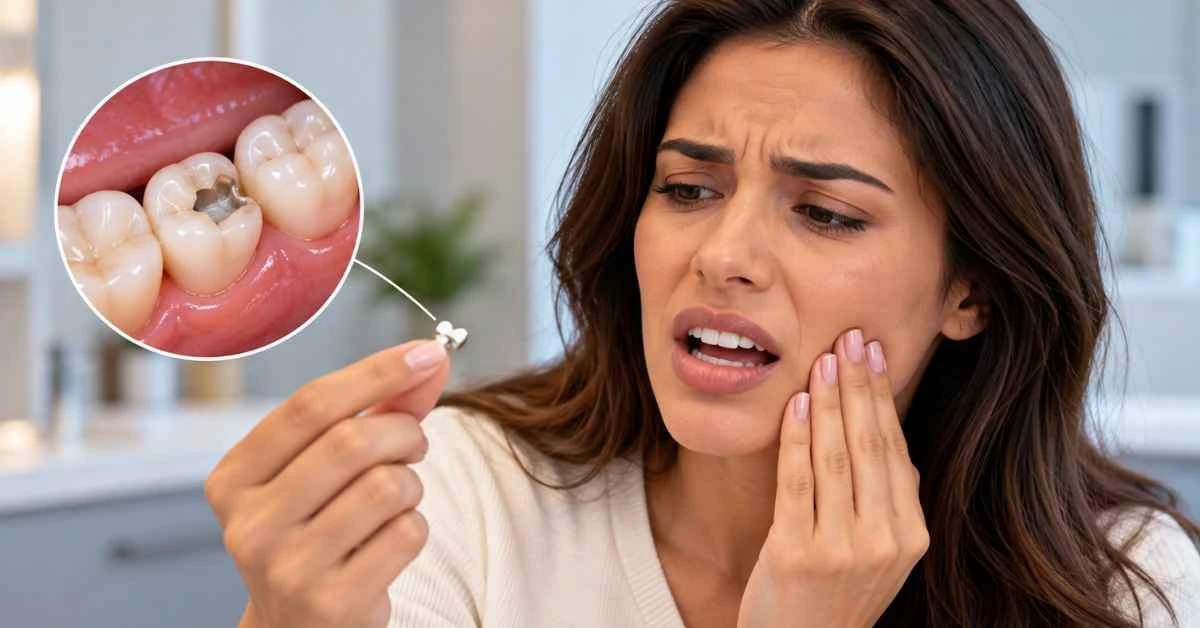
You bite into dinner and suddenly feel something hard come loose. If your dental filling falls out, the tooth may feel sharp, sensitive, or strangely hollow. The first step is to protect the tooth, avoid chewing on that side, and arrange a dental appointment as soon as you can. A lost filling is not always a hospital-level emergency, but leaving the tooth exposed can allow food, bacteria, temperature changes, or further damage to become a bigger problem.
Quick Answer: What Should You Do If a Dental Filling Falls Out?
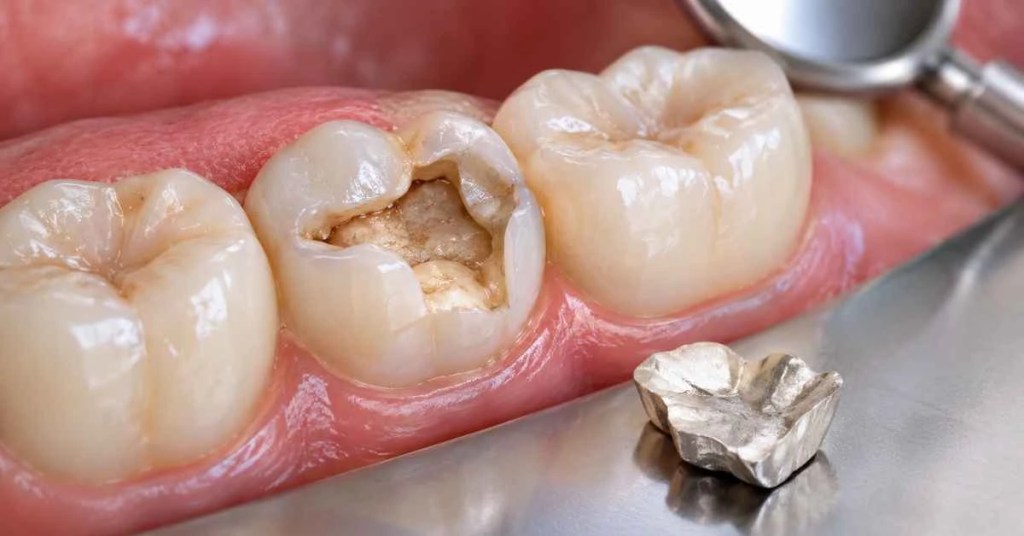
If a dental filling falls out, gently clean your mouth, avoid chewing on the affected tooth, and contact your dentist for an evaluation. A temporary dental repair product may help protect the area briefly, but it does not replace professional treatment. Seek urgent care if you develop severe pain, facial swelling, fever, uncontrolled bleeding, or trouble breathing or swallowing.
What to Do Immediately After a Dental Filling Falls Out
The goal is to keep the exposed tooth clean and reduce irritation until a dentist can examine it.
- Rinse gently. Use lukewarm water to remove loose food and debris. Do not aggressively scrape the tooth.
- Save the filling if you can. If the restoration came out in one piece, keep it and bring it to your appointment.
- Avoid chewing on that side. Choose softer foods and use the opposite side of your mouth.
- Protect the area temporarily. Cleveland Clinic notes that sugarless gum or over-the-counter dental cement can be used temporarily for a missing filling. Follow product directions and use it only until you can be evaluated.
- Do not use household glue. Products such as super glue are not intended for dental use and should never be placed in your mouth.
Is a Lost Filling a Dental Emergency?
Not every dental filling that falls out requires an emergency-room visit. However, it does deserve timely dental attention.
A lost filling does not always require a trip to the emergency room, but it should be evaluated by a dentist promptly. The urgency depends on symptoms such as pain, swelling, infection, bleeding, or additional damage to the tooth.
| Situation | What it may mean | Recommended next step |
| Filling is out, little or no pain. | The tooth may still be vulnerable. | Arrange a dental evaluation promptly. |
| Cold or sweet sensitivity | Exposed inner tooth structure may be reacting. | Avoid triggers and contact your dentist. |
| Sharp edge or broken tooth | More tooth structure may have fractured. | Ask for a prompt dental examination. |
| Severe pain, swelling, fever, or drainage | Possible significant inflammation or infection | Seek urgent dental care. |
| Facial/neck swelling or trouble breathing/swallowing | Potentially serious infection or airway problem | Seek emergency medical care. |
Why Does a Dental Filling Fall Out?
Fillings do not last forever. Normal chewing forces, wear, cracks, leakage around the restoration, recurrent decay, or tooth fracture can contribute to failure.
The National Institute of Dental and Craniofacial Research explains that fillings restore teeth affected by cavities, and restorations may eventually need replacement. Decay can also continue around a restoration when bacteria and acids damage the tooth.
What Happens at the Dentist After a Filling Falls Out?
Your dentist will examine the tooth and ask about symptoms such as pain, sensitivity, swelling, or a change in your bite. An X-ray may be recommended when the dentist needs to assess areas that cannot be seen directly.
Treatment depends on what the examination shows. Possible options include:
- A new filling: When enough healthy tooth structure remains.
- Repair of the restoration: In some cases, a restoration can be repaired rather than completely replaced.
- A crown: May be considered when the tooth is substantially weakened or damaged.
- Root canal treatment: May be necessary when decay or damage affects the pulp.
- Extraction: Generally considered only when the tooth cannot be predictably restored.
Jain Dental Care explains that fillings are generally used for smaller areas of decay or damage, while crowns can provide more coverage for severely damaged or weakened teeth. Learn more about the practice’s fillings and crowns services.
What Should You Avoid After a Dental Filling Falls Out?
Avoid:
- Chewing hard, sticky, or very hot foods on the affected side.
- Picking at the opening with sharp objects.
- Trying to permanently glue the filling back yourself.
- Ignoring increasing pain because the tooth initially feels fine.
- Delaying an appointment for weeks while the tooth remains exposed.
Keeping the area clean and minimising pressure is a better short-term strategy while you arrange professional care.
When Should You Seek Emergency Dental Care?
Contact a dentist promptly if a filling has fallen out, especially if the tooth is painful or damaged. Jain Dental Care also provides emergency dental care for urgent dental concerns.
Seek emergency medical attention rather than waiting for a routine dental appointment if you have significant facial or neck swelling with difficulty breathing or swallowing, heavy bleeding that does not stop, or other signs of a serious medical emergency. Cleveland Clinic’s dental emergency guidance notes that untreated dental infections can sometimes cause facial or jaw swelling and may spread beyond the immediate area.
How Can You Prevent Another Lost Filling?
You cannot prevent every restoration from wearing out, but good oral care can reduce factors that contribute to tooth decay and restoration problems.
- Brush twice daily with fluoride toothpaste.
- Clean between your teeth regularly.
- Limit frequent sugary and highly acidic foods and drinks.
- Attend regular dental examinations and professional cleanings.
- Tell your dentist if you grind or clench your teeth.
- Ask about a protective night guard if your dentist believes grinding contributes to wear.
NIDCR guidance on tooth decay prevention recommends fluoride toothpaste and regular cleaning between teeth as part of tooth-decay prevention. Regular dental visits can also help identify damaged or ageing restorations before they fail unexpectedly.
Conclusion: Act Promptly When a Filling Falls Out
If your dental filling falls out suddenly, protect the tooth, avoid unnecessary pressure, and arrange a dental evaluation. Temporary protection can help while you wait, but it should not replace professional care.
For patients in Atlanta, Georgia, Jain Dental Care can evaluate the affected tooth and determine whether it needs a new filling, repair, crown, or another treatment. The practice also provides information about missing teeth and bone loss in Atlanta for patients interested in longer-term oral health.
If the tooth is becoming more painful, swollen, or difficult to use, getting it checked promptly is the practical next step.
Frequently Asked Questions
Can a dental filling fall out without pain?
Yes. A filling can become loose or fall out without immediate pain. However, the exposed tooth may still be vulnerable to sensitivity, food accumulation, further decay, or fracture, so a dental evaluation is appropriate.
Can I eat after my filling falls out?
You can generally eat, but choose softer foods and chew on the opposite side. Avoid very hot, cold, hard, sticky, or sugary foods if they trigger sensitivity.
Can I temporarily replace a lost filling at home?
Temporary dental cement or sugarless gum may help protect the opening until you see a dentist, but these are short-term measures. They do not correct the underlying problem.
How long can I wait after a filling falls out?
There is no single safe waiting period for every tooth. Timing depends on the size and location of the restoration, the condition of the tooth, and your symptoms. Contact your dentist promptly rather than waiting for pain.
Will I always need another filling?
No. Treatment depends on the tooth’s condition. A dentist may recommend a new filling, repair, crown, root canal treatment, or another option after examination.
Can a missing filling lead to tooth loss?
A missing filling does not automatically mean you will lose the tooth. However, untreated decay, fracture, or infection can progress and may eventually make a tooth difficult or impossible to restore. Early assessment gives the dentist an opportunity to address the problem before it becomes more extensive.