

Bleeding gums can feel alarming, especially when it happens suddenly or doesn’t stop. While occasional mild bleeding may not always be serious, there are situations where bleeding gum emergency care becomes essential. Ignoring the warning signs can lead to more severe oral health issues, including infection or tooth loss.
If you’re in Atlanta and dealing with persistent or heavy gum bleeding, understanding when to act can make all the difference.
What Is Bleeding Gum Emergency Care?
Bleeding gum emergency care refers to immediate dental attention required when gum bleeding is severe, persistent, or accompanied by other symptoms like pain, swelling, or infection. While minor bleeding may occur due to brushing too hard, serious cases often indicate underlying conditions that require professional treatment.
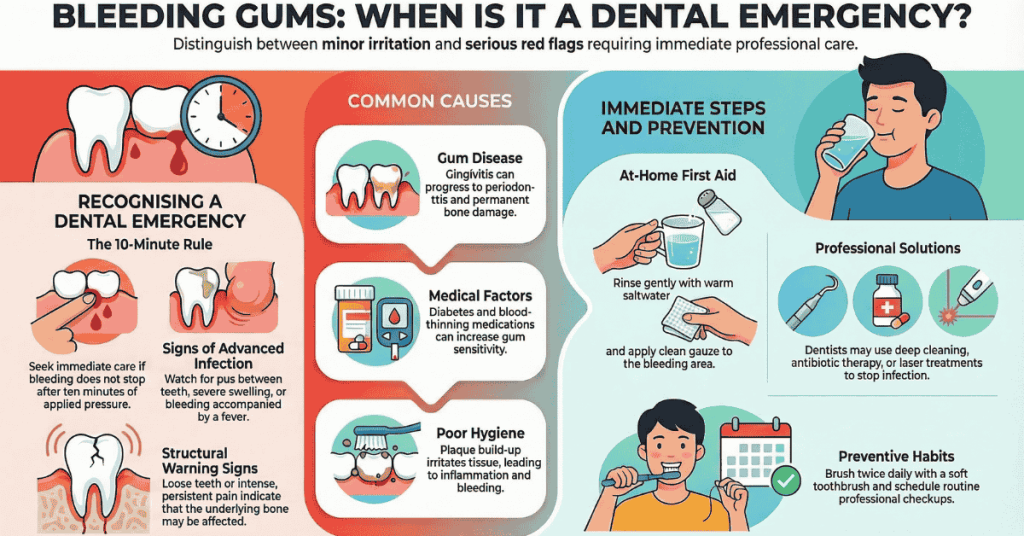
Common Causes of Bleeding Gums
Understanding the root cause helps determine whether you need bleeding gums, emergency treatment or simple at-home care.
1. Gum Disease (Gingivitis or Periodontitis)
This is the most common cause of bleeding gums. Early-stage gingivitis can progress into periodontitis if untreated, leading to severe complications.
2. Poor Oral Hygiene
Inadequate brushing and flossing allow plaque to build up, irritating the gums.
3. Sudden Changes in Oral Care
Switching toothbrushes or flossing aggressively can cause sudden bleeding gums.
4. Medical Conditions
Conditions like diabetes or blood disorders can increase gum sensitivity and bleeding.
5. Medications
Blood thinners or certain medications can contribute to excessive bleeding.
Signs You Need Immediate Dental Attention
Not all gum bleeding requires urgent care, but certain symptoms signal the need for bleeding gum emergency care right away.
Watch for These Warning Signs:
- Bleeding that doesn’t stop after 10 minutes
- Swollen, red, or tender gums
- Pus between teeth and gums
- Loose teeth
- Severe pain or discomfort
- Bleeding accompanied by fever
If you notice any of these, it’s time to contact a bleeding gums dentist in Atlanta immediately.
Why You Shouldn’t Ignore Severe Bleeding Gums
Delaying treatment can worsen your condition and lead to:
- Advanced gum disease
- Tooth loss
- Bone damage
- Spread of infection
Seeking severe bleeding gums treatment early helps prevent long-term complications and restores your oral health. Bleeding gums should never be ignored, even if the amount seems minor. It is often an early warning sign of gum disease, such as gingivitis or periodontitis, which can worsen without timely treatment.
What to Do Before Visiting a Dentist
While waiting to see an emergency dentist for bleeding gums, you can take these steps:
- Rinse gently with warm saltwater
- Apply clean gauze to stop bleeding
- Avoid hard or spicy foods
- Use a soft-bristled toothbrush
- Stay hydrated
These measures can temporarily manage symptoms but are not a substitute for professional bleeding gum emergency care.
Professional Treatments for Bleeding Gums
When you visit a dental clinic in Atlanta, your dentist will assess the severity and recommend appropriate bleeding gums emergency treatment.
Common Treatments Include:
- Deep Cleaning (Scaling and Root Planing)
Removes plaque and tartar below the gum line - Antibiotic Therapy
Treats bacterial infections - Laser Treatment
Minimally invasive option for infected gums - Surgical Procedures
For advanced cases of gum disease
Choosing the Right Emergency Dentist in Atlanta
When dealing with urgent symptoms, finding a reliable emergency dentist for bleeding gums is crucial.
Look for:
- Same-day appointments
- Experience with gum disease treatment
- Positive patient reviews
- Advanced dental technology
Preventing Future Gum Emergencies
Prevention is always better than cure. Regular dental care can reduce the risk of needing bleeding gum emergency care in the future.
Tips for Healthy Gums:
- Brush twice daily with a soft toothbrush
- Floss regularly
- Use an antibacterial mouthwash
- Schedule routine dental checkups
- Avoid smoking
- Maintain a balanced diet
For more oral health tips, you can also explore related blogs on the clinic’s website.
When Bleeding Gums Become an Emergency
Not every case requires urgent care, but you should treat it seriously when:
- Bleeding is heavy or persistent
- It interferes with eating or speaking
- There’s visible infection or swelling
- Home remedies don’t help
In such cases, seeking bleeding gum emergency care ensures timely diagnosis and treatment. If you’re unsure whether your condition qualifies as an emergency, visiting an emergency care service can help you get clarity and prompt relief.
Final Thoughts
Bleeding gums are your body’s way of signaling that something isn’t right. While mild cases may resolve with improved oral hygiene, persistent or severe symptoms require immediate bleeding gum emergency care. If you’re in Atlanta and experiencing concerning symptoms, don’t delay. Prompt attention from an experienced dental professional can protect your gums, teeth, and overall health. You can also check pur Google business profile to see patient feedback and clinic details. If you need immediate assistance, don’t hesitate to contact the dental office.
FAQs
1. Why are my gums bleeding suddenly?
Sudden bleeding gums can result from aggressive brushing, flossing after a long gap, or underlying gum disease. Hormonal changes or medications may also contribute.
2. When should I see a dentist for bleeding gums?
You should visit a bleeding gums dentist if bleeding persists for more than a few days, worsens, or is accompanied by pain or swelling.
3. Are bleeding gums a dental emergency?
Not always. However, persistent or heavy bleeding requires bleeding gum emergency care, especially if linked to infection or trauma.
4. How can I stop bleeding gums quickly?
You can:
- Rinse with saltwater
- Apply gentle pressure with gauze
- Avoid irritating foods
These are temporary fixes, professional bleeding gums emergency treatment may still be necessary.
5. What causes severe bleeding gums?
Severe bleeding gums treatment is often needed when the cause is advanced gum disease, infections, or systemic health issues.