
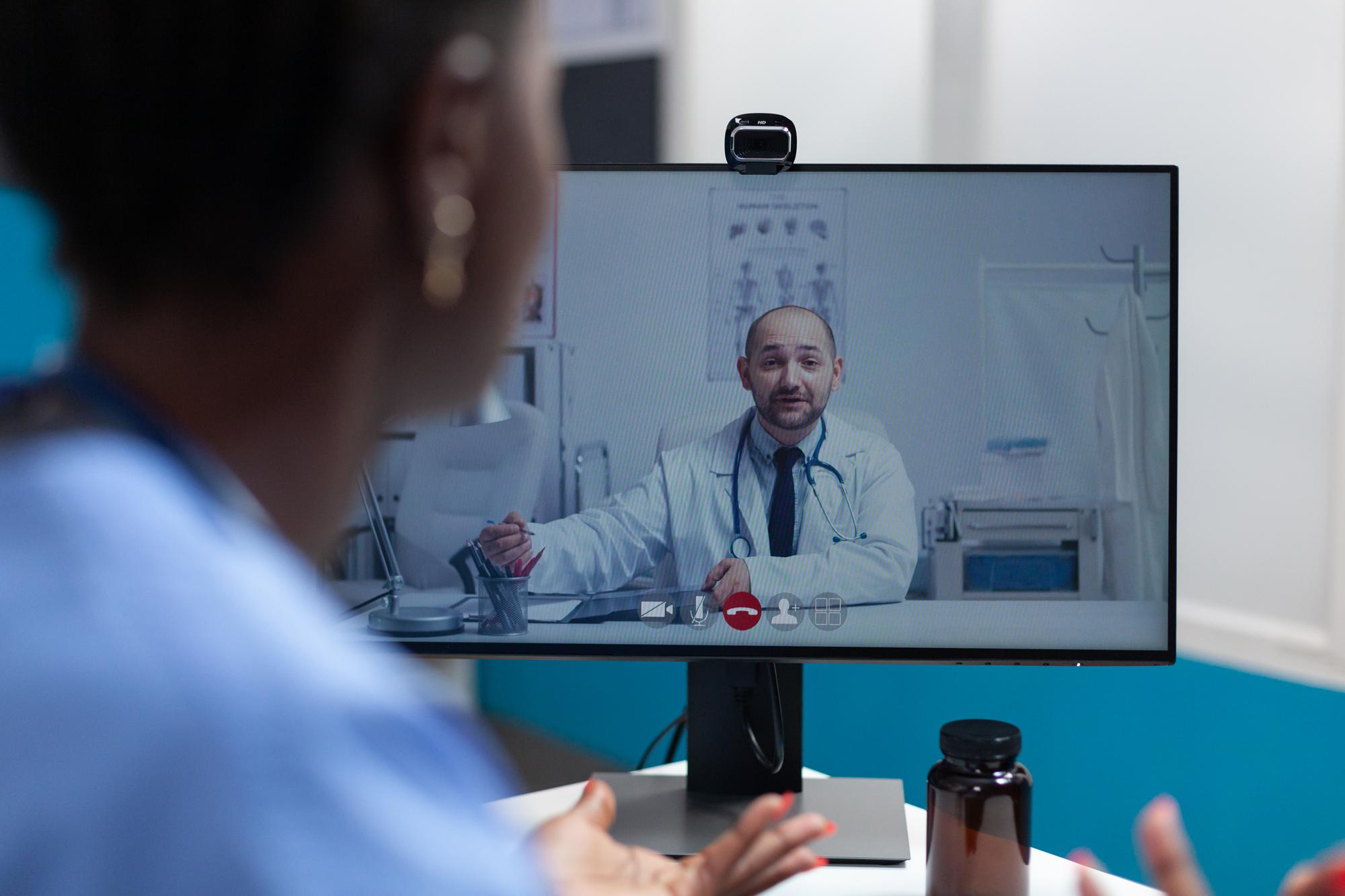
What you if you don’t have time to visit your dentist? Thanks to your office hours, family and other commitments. Enter virtual healthcare services like teledentistry.
Teledentistry gives you remote access to digital treatments. It lets you get your oral health checked in the comfort of your place via phone or video conference. The simplest example includes sending a video or photo of your dental problem to your dentist over messaging apps. Once your dentist spots the issue, they can make a diagnosis and prescribe to treat the condition.
This is especially helpful for people who live in far-away areas or have trouble traveling. Let’s dive into what teledentistry is and the different types of services it offers to help take care of your teeth!
What is Teledentistry?
Teledentistry is when a dentist provides care or advice to a patient through digital tools like video calls, messages, or photos. It’s similar to visiting a dentist in person, but instead of sitting in the dentist’s chair, you’re communicating with your dentist from home using a computer or phone.
Teledentistry can help with things like check-ups, follow-up appointments, and even emergencies. It also allows dentists to monitor your oral health in a way that is more convenient for you and helps make dental care more accessible. This is important for people who live in rural or remote areas, where visiting a dentist might be hard.

Common Teledentistry Services
Now, let’s talk about the different types of teledentistry services that help make dental care easier and more accessible for everyone.
- Remote Examinations and Screenings
One of the most common services in teledentistry is remote examinations and screenings. This is when you have a virtual appointment with your dentist to check your teeth and gums. You can send pictures or videos of your teeth to your dentist, or you might have a video call where the dentist can see your mouth.
This treatment helps ensure that your gums and teeth are in good condition. The dentist can examine for gum disease, cavities, and other issues that may require care. It’s similar to getting checked out at home!
However, sometimes, your dentist might need you to come in person for more detailed care if something serious is found.
Benefits:
- It’s a quick way to check on your oral health.
- It saves time and travel since you don’t have to leave home.
- Virtual Follow-up Care
Sometimes, after you’ve had a dental treatment or surgery, you might need to follow up with your dentist to make sure everything is healing well. Virtual follow-up care allows you to do this without having to visit the dentist’s office. You can have a video call or send pictures to show your progress.
For example, if you’ve had braces put on or a tooth pulled, your dentist might want to see how you’re doing. They can check if your gums are healing or if your braces are fitting properly. It’s like having a check-in to make sure everything is okay!
Benefits:
- You can stay on track with your treatment plan.
- It’s convenient and doesn’t require an office visit.
- Teledentistry for Emergency Care
Sometimes, dental problems can happen unexpectedly. You might wake up with a toothache or have a broken tooth after an accident. Teledentistry for emergency care lets you talk to a dentist quickly, even if it’s after regular office hours.
In a dental emergency, the dentist will ask about your symptoms and might ask you to send pictures or videos of the problem. They can assist you in determining whether you can wait until the following day or if you must see a dentist in person immediately. With the help of this service, you can receive the care you require as soon as possible.
Benefits:
- You get help in case of a dental emergency, even outside regular hours.
- It helps you figure out if you need immediate treatment.

- Virtual Dental Examinations
Virtual dental examinations are similar to remote examinations, but they focus more on the dentist’s ability to do a detailed visual check of your teeth. During this service, the dentist will guide you on how to take clear pictures of your mouth, teeth, and gums. You might also have a video call where the dentist asks you to show different angles of your teeth.
While virtual exams are helpful for basic check-ups, they can’t replace an in-person exam. There are certain things a dentist can’t check through a video call, like feeling your teeth for cavities or checking the inside of your mouth with special tools. If the dentist finds anything that needs more attention, they’ll schedule a time for you to visit in person.
Benefits:
- It’s an easy way to check if your teeth are healthy.
- It saves time by allowing you to do it from home.
- Remote Treatment Planning and Management
After a dentist examines your teeth, they might need to create a treatment plan for you. Remote treatment planning and management is when the dentist develops a plan for your care and adjusts it based on how well you’re doing. This might involve regular check-ins through video calls or messages to see how you’re feeling and if the treatment is working.
For example, if you are wearing braces, the dentist might check every few months to see how well your teeth are moving and make adjustments to your treatment plan. It’s like having a personal coach to help you take care of your teeth!
Benefits:
- You can get help with your treatment plan from anywhere.
- Your treatment can be adjusted if needed.
- Oral Health Wearable Devices
In addition to teledentistry services, there are also oral health wearable devices that help you take better care of your teeth. These devices can track things like your brushing habits, how much plaque is on your teeth, and even if your gums are healthy. Some devices connect to an app on your phone, and the dentist can monitor your progress.
For example, you might wear oral health wearable devices that send information to your dentist. This enables the dentist to determine whether you are brushing correctly or whether your regimen needs to be modified. You can monitor your oral health every day with these wearable gadgets!
Benefits:
- You can keep track of your brushing and oral health habits.
- Dentists can help you make changes based on the data from the devices.
Key Benefits of Teledentistry
Now that we know the different types of teledentistry services, let’s talk about the benefits of using them.
- Increased Access to Care
Teledentistry makes it easier for people who live in remote or rural areas to see a dentist. If you live far away from a dental office, you can still get the care you need without traveling long distances.
- More Convenient
You don’t have to spend hours driving to a dentist’s office. With teledentistry, you can have an appointment from the comfort of your home, saving you time and energy.
- Better Monitoring and Care
Teledentistry allows dentists to keep track of your treatment and make sure you’re following your care plan. They can help you stay on track with things like braces or teeth cleaning.
- Fast Responses
If you have a dental emergency, teledentistry allows you to get quick advice from a dentist. This helps you figure out what to do next, whether you need to go to the office or wait a little while.
- Teaching and Education
Teledentistry can also help teach you about taking care of your teeth. Dentists can provide advice and information on brushing, flossing, and preventing cavities, all from a distance.
Conclusion
Teledentistry is a helpful way to make dental care more accessible and convenient for everyone. Whether you’re having a routine check-up, need follow-up care, or even experience a dental emergency, teledentistry offers a way to get help remotely. Plus, with the help of oral health wearable devices, dentists can monitor your oral health from a distance, ensuring you stay on top of your dental care.
The next time you need dental care, you can feel confident that teledentistry might be an option that makes things easier and more convenient for you!